REM Atelier

REM Atelier is a Dutch design and art studio founded by Remty Elenga (b. 1987, The Netherlands) and Remco van Halderen (b. 1985, The Netherlands).
Based in the Netherlands, the studio operates at the intersection of design, sculpture, and installation, exploring the boundaries between functionality, materiality, and everyday objects. The name “REM” combines the initials of both designers, reflecting their collaborative and interdisciplinary approach.
The practice of REM Atelier is defined by an ongoing investigation into materials and their transformation. Their work often juxtaposes organic and artificial elements, resulting in objects that appear both familiar and unfamiliar. By reinterpreting natural forms through industrial or synthetic means, they create a tension that invites reflection on the origins, perception, and role of materials.
Central to their approach is a dialogue between the handcrafted and the manufactured. Through experimentation and process-driven making, REM Atelier challenges conventional distinctions between design and art. Their objects frequently blur the line between functional pieces and sculptural forms, encouraging a reconsideration of how objects are used, perceived, and valued.
Their works range from smaller objects to large-scale installations, often characterized by layered surfaces, irregular forms, and a strong tactile presence. Materials such as wood and metal are manipulated into compositions that evoke organic structures while maintaining an abstract, constructed quality. This interplay results in pieces that engage both visually and spatially, creating a sense of immersion. Many of their works are highly customizable, allowing materials, scale, and finishes to be adapted to specific contexts or environments.
Recurring within their work is an interest in transformation, how materials shift in meaning and appearance through intervention. Their installations and objects often suggest natural growth or mutation, yet remain clearly shaped by human intervention. This ambiguity forms the basis of their visual language, where function and form coexist without fixed hierarchy.
Working across disciplines, Elenga and van Halderen combine backgrounds in design and art, enabling a collaborative practice that resists categorization. Their work occupies a space between functional design, sculptural object, and conceptual installation, reflecting a broader inquiry into the relationship between humans, materials, and the built environment.
-
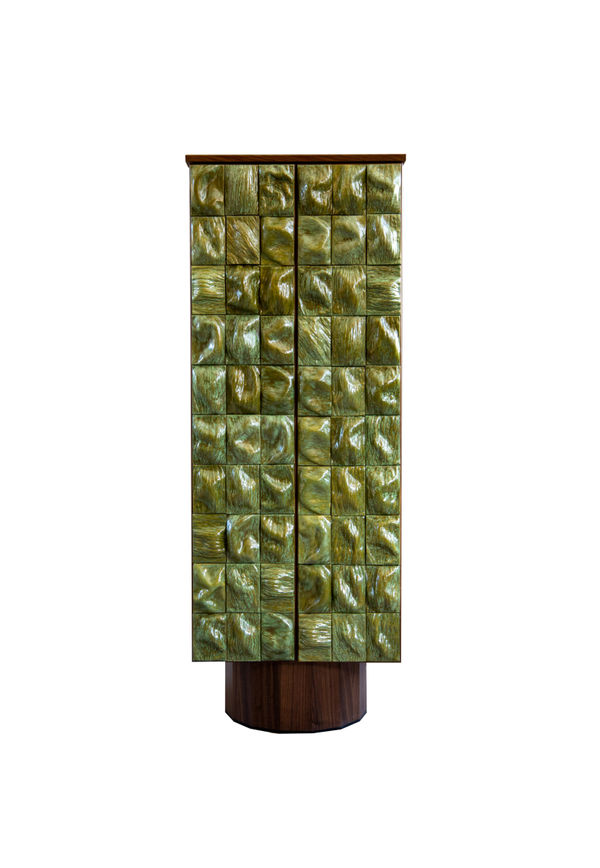
 Surfaced Cabinet - Moss€ 30,000.00
 -
Surfaced Cabinet - Round Green€ 45,000.00
-
Surface Cabinet: Autumn Green€ 16,500.00
-
Tall Cabinet moss€ 18,000.00
-
Surfaced Cabinet - Golden Hour€ 45,000.00
-
Surface Cabinet € 40,000.00
-
Surfaced Cabinet - Round - Starry Night € 41,000.00
-
Surfaced Cabinet - White Gloss€ 30,000.00
-
Surfaced Cabinet - Mother of pearl€ 25,000.00
-
Surfaced Cabinet - Transparent € 35,000.00
-
Vanity Mirror - Golden Hour€ 12,500.00
-
Shifting Forms - blue/green€ 72,000.00
-
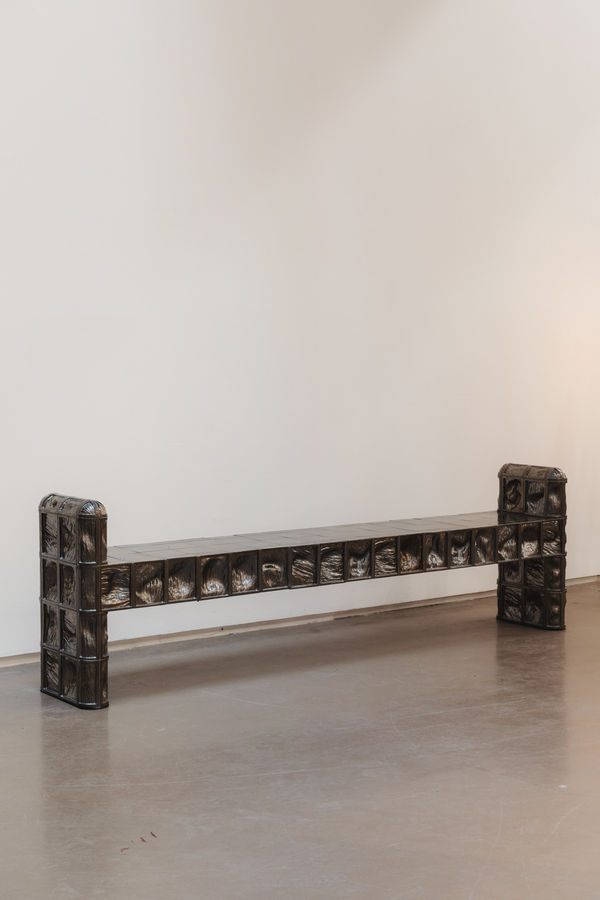
Shifting Forms Bench, 2025€ 15,500.00
-
Surface Cabinet: Golden Hour€ 16,500.00
-
Infinity 8€ 46,000.00
-
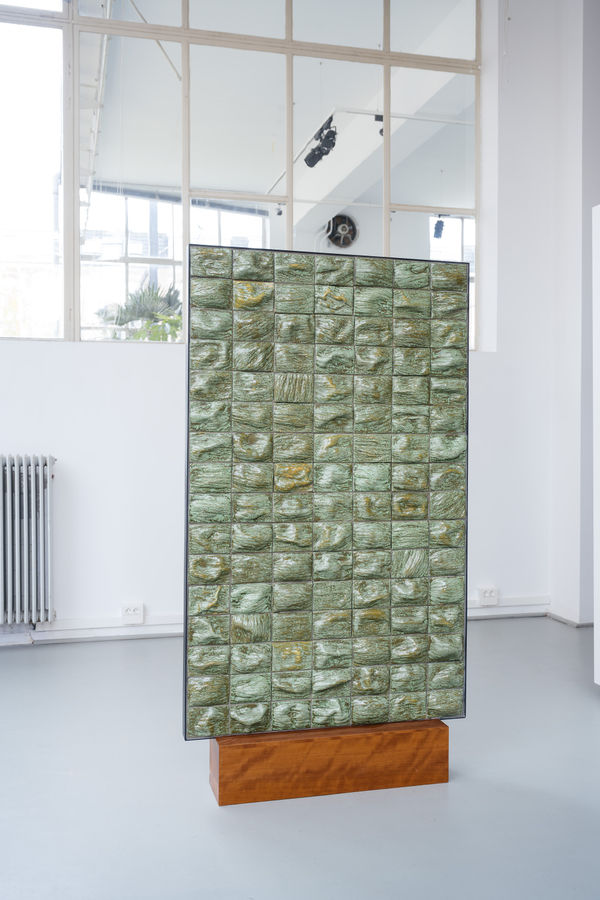
Melon Skin Room Divider€ 22,000.00
-
Surfaced Cabinet - Mother of Pearl€ 8,000.00
-
Curved Melon Totem Lavander Green- Double Stem€ 21,500.00
-
Curved Totem - Blue€ 21,500.00
-
Hue Screen€ 25,000.00
-
Wall skins - Gold skin€ 1,000.00
-
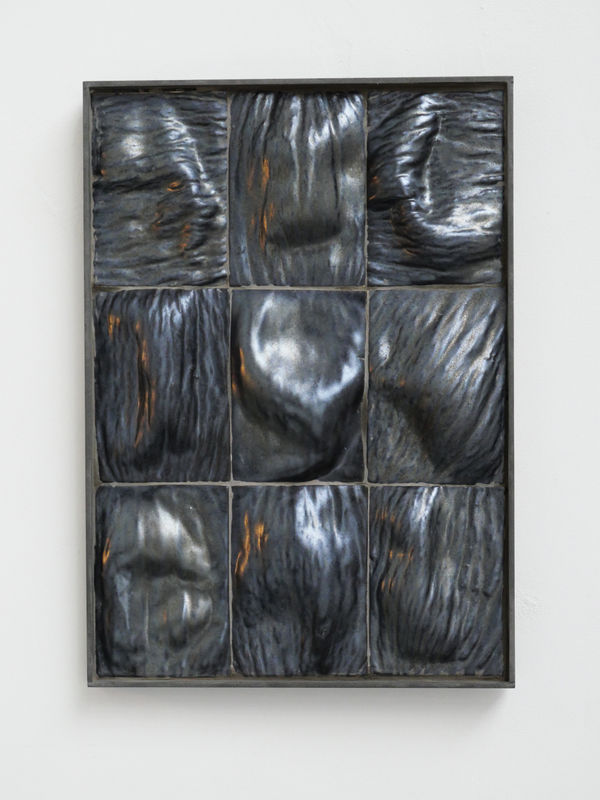
Wall skins - Oil Skin€ 750.00
-
Wall skins - Oil Skin€ 1,000.00
-
Wall skins - Gold skin€ 750.00








-

PAN Amsterdam 2026
Booth 3 1 - 8 Nov 2026PAN Amsterdam is the highlight of the year for Rademakers Gallery within the Dutch art fair landscape. We are proud to be returning in 2026,...Read more -

PAD London 2026
Booth C6 13 - 18 Oct 2026Rademakers Gallery is delighted to return to PAD London this October with Overgrown - a presentation inspired by the richness, textures and colours of the...Read more -
Art Rotterdam 2026
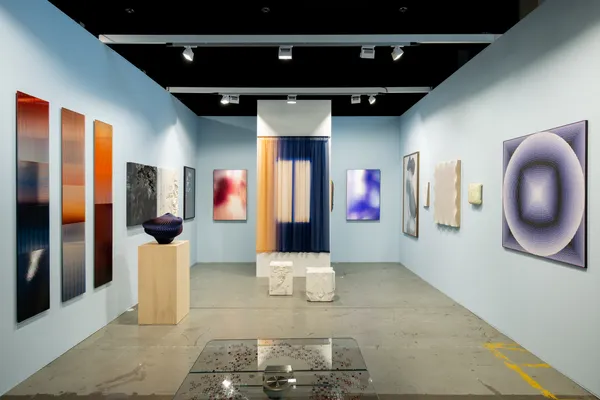
Booth A08 26 - 29 Mar 2026Rademakers Gallery returns to Art Rotterdam in 2026, with a curated presentation, dedicated to the connection between movement, art and design. The collection explores the...Read more -

PAN Amsterdam 2025
Booth 3 1 - 9 Nov 2025PAN Amsterdam is the highlight of the year for Rademakers Gallery within the Dutch art fair landscape. We are proud to be returning in 2025,...Read more -

PAN Amsterdam 2024
24 Nov - 1 Dec 2024Seen on PAN Amsterdam 2024Read more -

PAD Paris 2024
3 - 7 Apr 2024On the 2024 edition of PAD Paris we are bringing the works by Joana Schneider, Rive Roshan, Jorge Mañes Rubio, Studio Rik ten Velden, Satyendra...Read more
