Etcetera

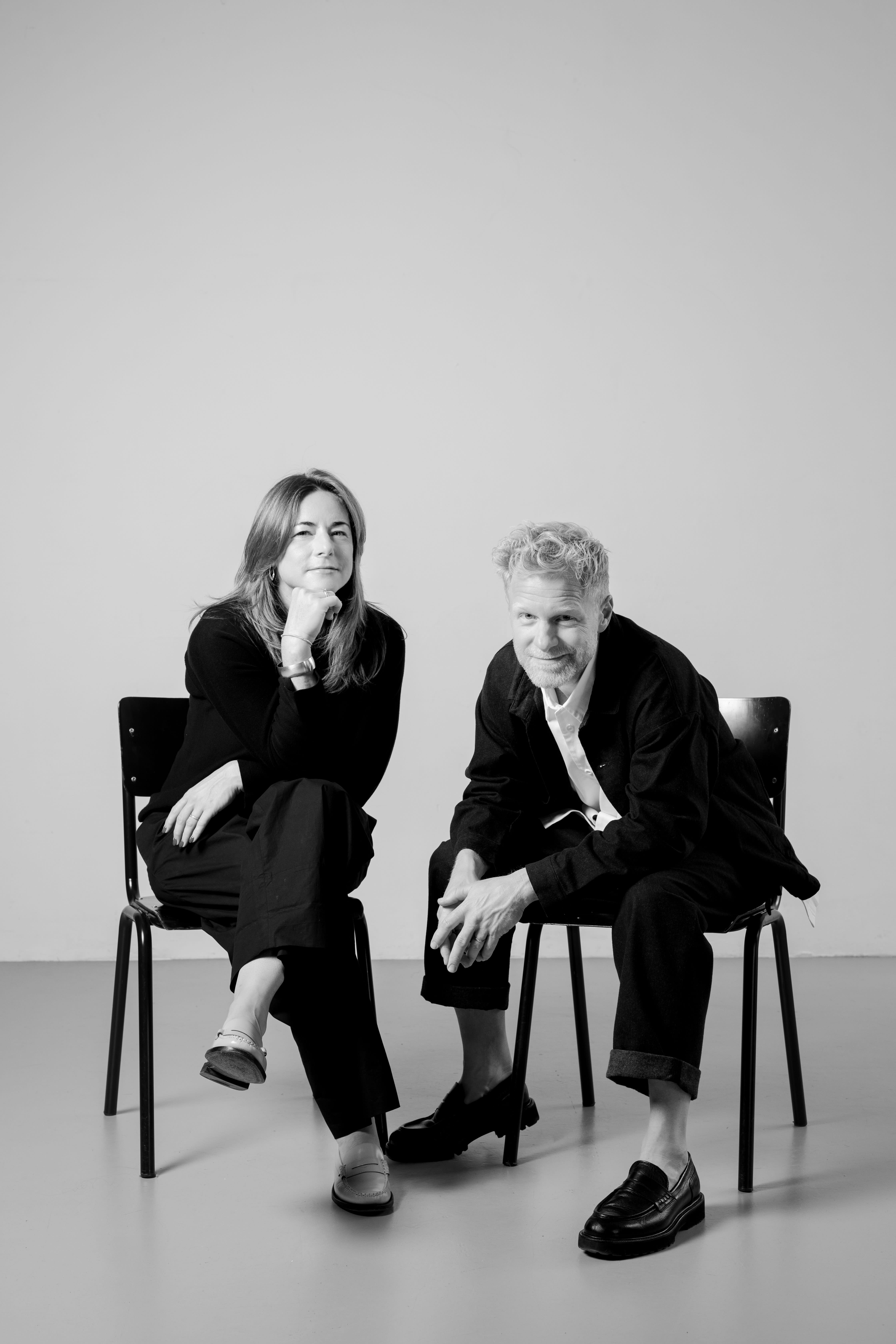
Ariane Stracke-Henderson
Ariane Stracke-Henderson is an architect whose work is shaped by an international perspective and a strong commitment to design research. She studied architecture in Germany and further developed her practice through advanced architectural studies in Vienna, where she refined her interest in experimental design and spatial thinking.
Her work explores the relationship between form, structure, and spatial experience. With a strong sensitivity to materiality and composition, she approaches architecture as a process of translating conceptual ideas into carefully considered spatial solutions. Through her practice, she investigates how architecture can create meaningful and engaging environments while maintaining clarity and precision in design.
Robert Henderson
Robert Henderson is an architect whose work focuses on the intersection of architecture, research, and technology. Educated in the United States, he developed an approach that combines architectural design with an interest in emerging technologies and innovative design processes.
His work explores how design methodologies can evolve through experimentation, research, and interdisciplinary collaboration. By integrating conceptual thinking with technological tools, he investigates new possibilities for architectural expression, creating projects that reflect both analytical rigor and contemporary design thinking.
Septa Chair
Septa Chair draws its sculptural form—and name—from the chamber walls (septa) of the nautilus shell. The rocking chair defines itself through an intentional elegance that emerges from its form and the dialogue between ergonomics and production. As Ariane and Robert’s first foray into product design, using robotic 3D printing for furniture arises from other work in their studio. Robotic production gives an unparalleled closeness to the hand of the designer through the digital model where the Septa Chair was originally sculpted. At the same time, they see the novel production technique as comparable to fiberglass production of furniture from the mid-20th century. Similar to fiberglass production of that time, 3D printing introduces new ideas of production, repetition, and uniqueness. Septa Chairs are produced on-demand in recycled materials with near exact repetition. Nevertheless, each chair is unique with small inconsistencies in the details.
Education
Ariane Stracke-Henderson
2000-2007 RWTH Aachen, Germany
2003-2007 University of applied Arts (Die Angewandte) Masterclass of Zaha Hadid, Vienna, Austria
Robert Henderson
1995-2000 Georgia Institute of Technology, Atlanta, USA
2000-2005 University of California (UCLA) Los Angeles, USA
-
 Septa Chair candy pink€ 1,800.00
 -
Septa Chair glacier blue€ 1,800.00
-
Septa chair gloss black€ 1,800.00
-
Septa Chair cloud white€ 1,950.00


